Resilient forests in a changing climate: highlights from the 12th Integrate Network Annual Meeting in Hungary
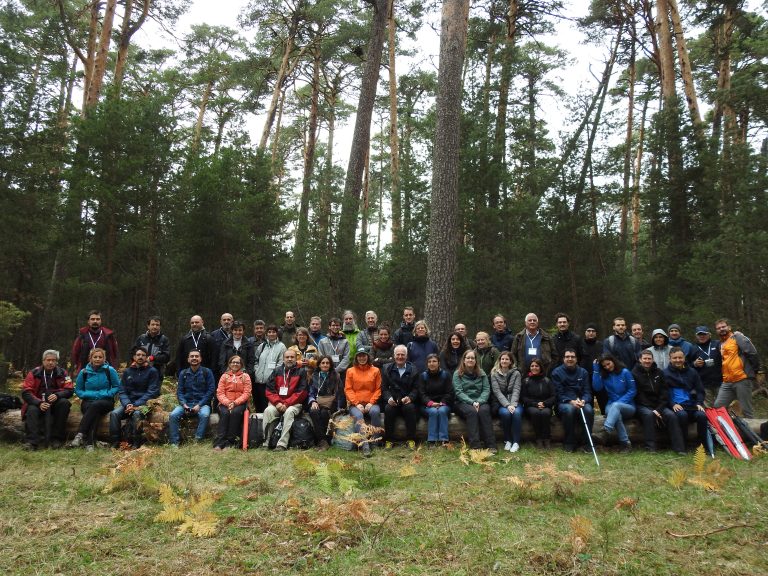
From the 13th to 15th of October 2026, more than 40 participants from 12 countries met in Visegrád, Hungary, for the 12th Annual Meeting of the Integrate Network. Under the theme “Resilient Forests in a Changing Climate: Exploring Central European Perspectives for Integrative Forest Management”, the meeting combined two field excursions with a conference day.
Into the forest-steppe
The meeting began in the Gödöllő Hills, near Dány, one of the driest regions of Hungary. In Turkey oak and sessile oak stands, participants compared two approaches side by side: artificial regeneration after clear-cutting, and close-to-nature continuous-cover forestry. Hosts used posters, cost models and a freshly dug soil pit to show why the close-to-nature approach is performing well here. It copes better with drought and cockchafer larvae, and is more cost-effective to regenerate. The evening ended with a demonstration of traditional Hungarian wooden folk instruments.


A day of ideas at the László Madas Forest School
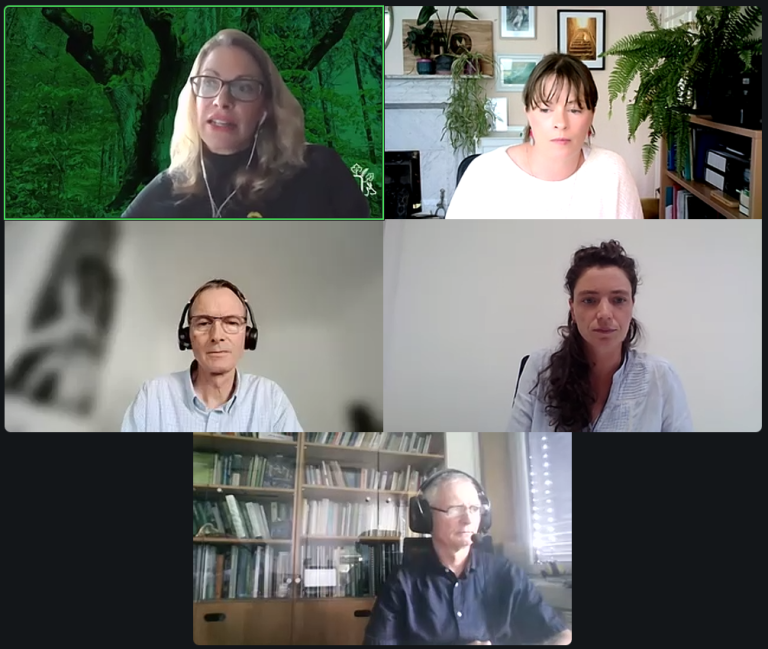
The conference day was held at the László Madas Forest School in Visegrád. The day opened with welcome words from the Head of the Integrate Network Secretariat, Bernhard Wolfslehner, and the 2026 Chair, Gergely Zagyvai (Hungary), followed by an overview of Hungary’s forests and their main challenges. The European Commission DG Environment, represented by Stefanie Schmidt then gave an update on EU policy relevant to integrative forest management. The rest of the morning focused on the regions’ forest being under considerable pressures due to climate change impacts such as wildfire, biotic damages and species loss and what may be ways to address the challenges:
- Wildfire: Bernhard Wolfslehner (on behalf of Alexander Held – EFI, FoRISK expert) gave insight on proactive wildfire risk mitigation.
- Forest health: Roman Modlinger (Czech University of Life Sciences and FoRISK expert) presented on biotic risks and adaptation pathways for Central European forests.
- Assisted migration: Bart Muys (KU Leuven) asked whether introduced tree species are a risk or an opportunity and pointed to the “elephant in the room” for close-to-nature silviculture: large-scale dieback driven by drought, heat, bark beetles and storms.
Participants then turned their reflections into ideas in small groups.
In the afternoon, speakers presented tools for bringing science into practice and education, such as the Forest MOOC For Change and its follow up MOOCFORCLIM and a European network of demonstration stands with open data. Three Hungarian case studies followed, from Pilis Park Forestry, Mecsekerdő and a private forest owner.


Seventy years of close-to-nature forestry
On the final day, the group visited the Pilis gap experiments. Since 2014, researchers there have been testing how gaps of different sizes affect microclimate, soils, biodiversity and regeneration. Next came the Mexikó-puszta Pro Silva exemplary forest, where 25 years of documented harvests show the economics of the transition to uneven-aged forest. The day ended in the Erdőanya Valley. Forester László Madas began managing this beech forest close to nature in 1954. More than 70 years later, it has trees of all ages, a rich mix of native species and abundant deadwood. It is living proof that a forest can be used and grow more natural over time.


See you in Czechia
At the last excursion point in Erdőanya Valley, the wooden key representing the network’s chairing process was officially handed over by Hungary to the Czech representation. They will chair the network in 2027. The next Annual Meeting will take place in Křtiny in October 2027, focusing on forest monitoring and ground-based data in support of integrative forest management.
A warm thank you to our Hungarian hosts, the University of Sopron and Pilis Park Forestry Company, and to all speakers and participants.